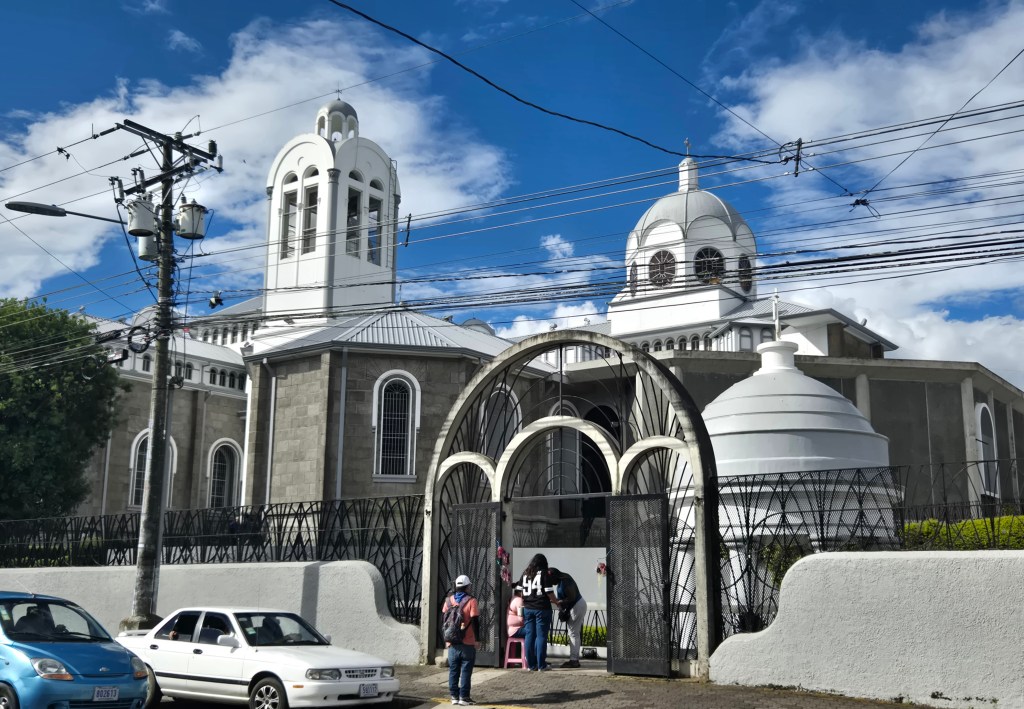
At last, we venture to one of two primary destinations when visiting Cartago. The Basilica de Nuestra Senora de los Angeles- Basilica of Our Lady of the Angels- hosts “La Negrita,” one of the Black Madonnas. Inside, the Basilica is lovely, as expected, a mixture of colonial architecture and 19th century Byzantine style. Originally built in 1639, it was partially destroyed by an earthquake and the current building dates back to 1939. The fine stained-glass windows (32), hand-painted interiors and ornate side chapels featuring carved-wood altars were replendant. The stations of the cross and other biblical stories are beautifully represented, and a string quartet playing softly in the background while worshippers knelt within the pews or at the altars.


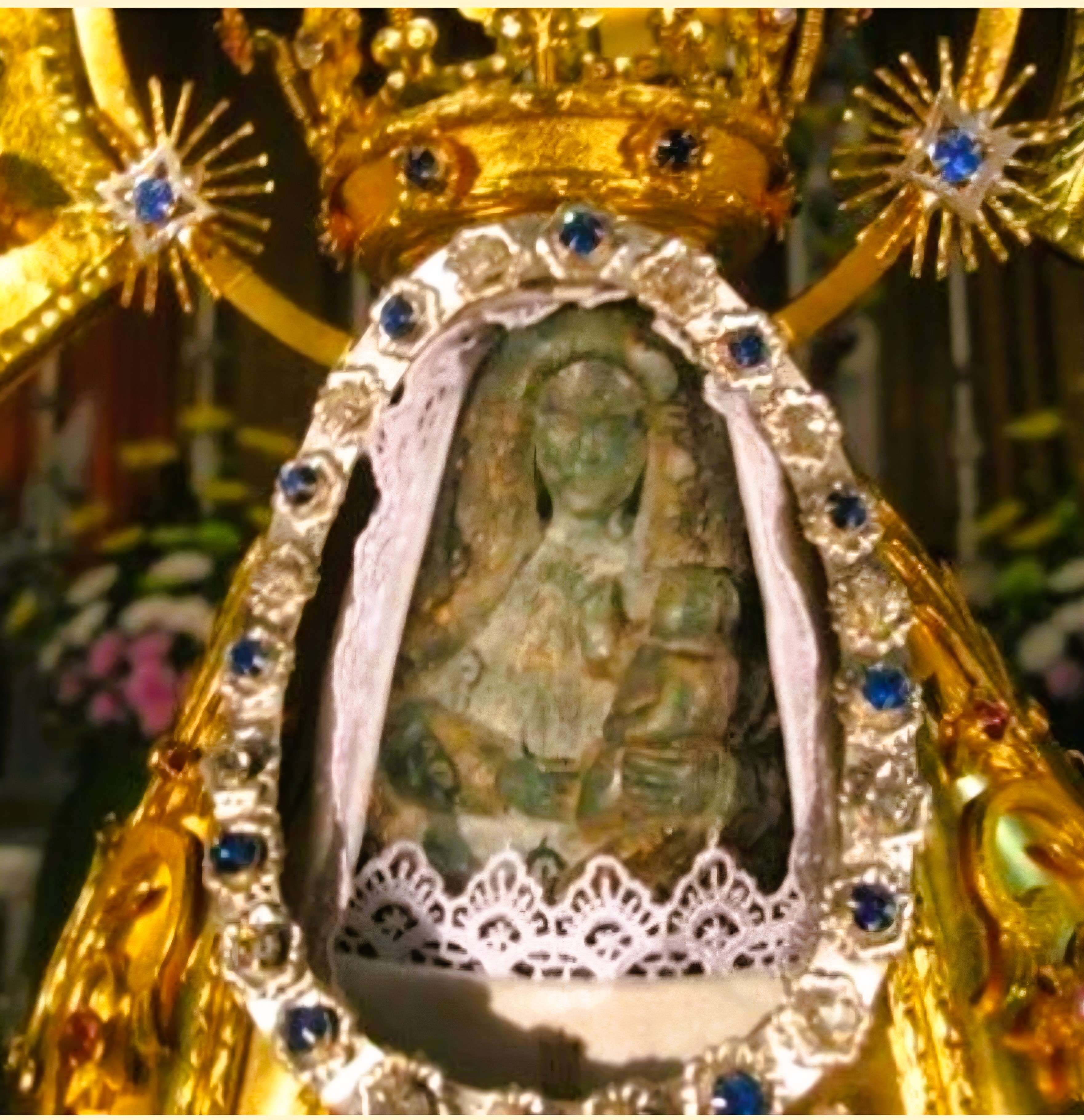
Represented in paintings and statues ( the latter made of wood or stone, painted and unpainted) and found throughout the world, Black Madonnas are those religious icons depicted with dark skin. My interest in these madonnas lies in the similarities with the black skin represented in earlier “mother,” “goddess,” and fertility figures such as Osiris (eqyptian), Andromeda (Ethopian), Artemis (Ephesus), and the proliferation of Sumarian Goddesses (among the oldest in the world), and tracing back to “Venus” figures from the Upper Paleolithic period. Here you find the a Black Madonna affectionately known as “La Negrita.” There is a delightful story about the discovery of the “la Negrita” statue (volcanic stone, jade and graphite) in 1635 by a peasant girl of humble origin who was puzzled by the statue’s mystical return to the hillside each time she moved it to her house. The discovery led to the construction of the basilica on tht spot. The “La Negrita” is venerated on Día de la Virgen de los Ángeles (Day of the Virgin of the Angels), Costa Rica’s most important religious festival and a national holiday held annually on August 2nd. The event is marked by a massive national pilgrimage, known as the Romería, to the Basilica of Our Lady of the Angels in Cartago. It is estimated that half of the country’s population—around 2.5 million people—walk from all parts of the nation to the basilica in Cartago. The most popular route is the approximately 25 km (15.5 miles) walk from San José to Cartago. The Negrita, a mere 20 cm tall, has become the symbol of unity for all social groups in Costa Rica and promotes the emancipation of women and recognition of their role as a vital and sacred part of the community. So I sat in the Basilica and thought about the rise and fall of women throughout history in light of reverence, respect, and power.
 The Existential Vagabond