Fun at the Feria del Agricultor (Farmer’s Fair)

On Saturdays, the town of Aserri hosts a Feria del Agricultor https://feria-del-agricultor-de-aserri.wheree.com/. We were very excited to shop there not only for the prices, but also for the experience (Debra LOVES a farmer’s market)!  It requires an additional walk down a hill (and then up a hill) but it is worth it.  The selection of fruits and vegetables is always a surprise, and there are several items we have yet to identify to try. Prior to entering the fair, we are required to wash our hands at the stations located at the entrance. But the washing station overlooks some of the most beautiful irises I have ever seen. I have tried to identify it and have settled on the “Sunset Glory.” What do you think?

Our “haul” has been excellent thus far. Everything is not always available on each Saturday, and we made the mistake of attending too late one day and found “slim pickins.” But it is always interesting and after attending several times, we are starting to identify some preferred vendors. We also get a delicious fruit drink called “frescos” when we leave as a grand reward for our efforts. These marvelous beverages are made from natural fruit juices and it is almost impossible to choose just one flavor, so you don’t! Here is a picture of our initial farmer’s fair selections—all for $11.

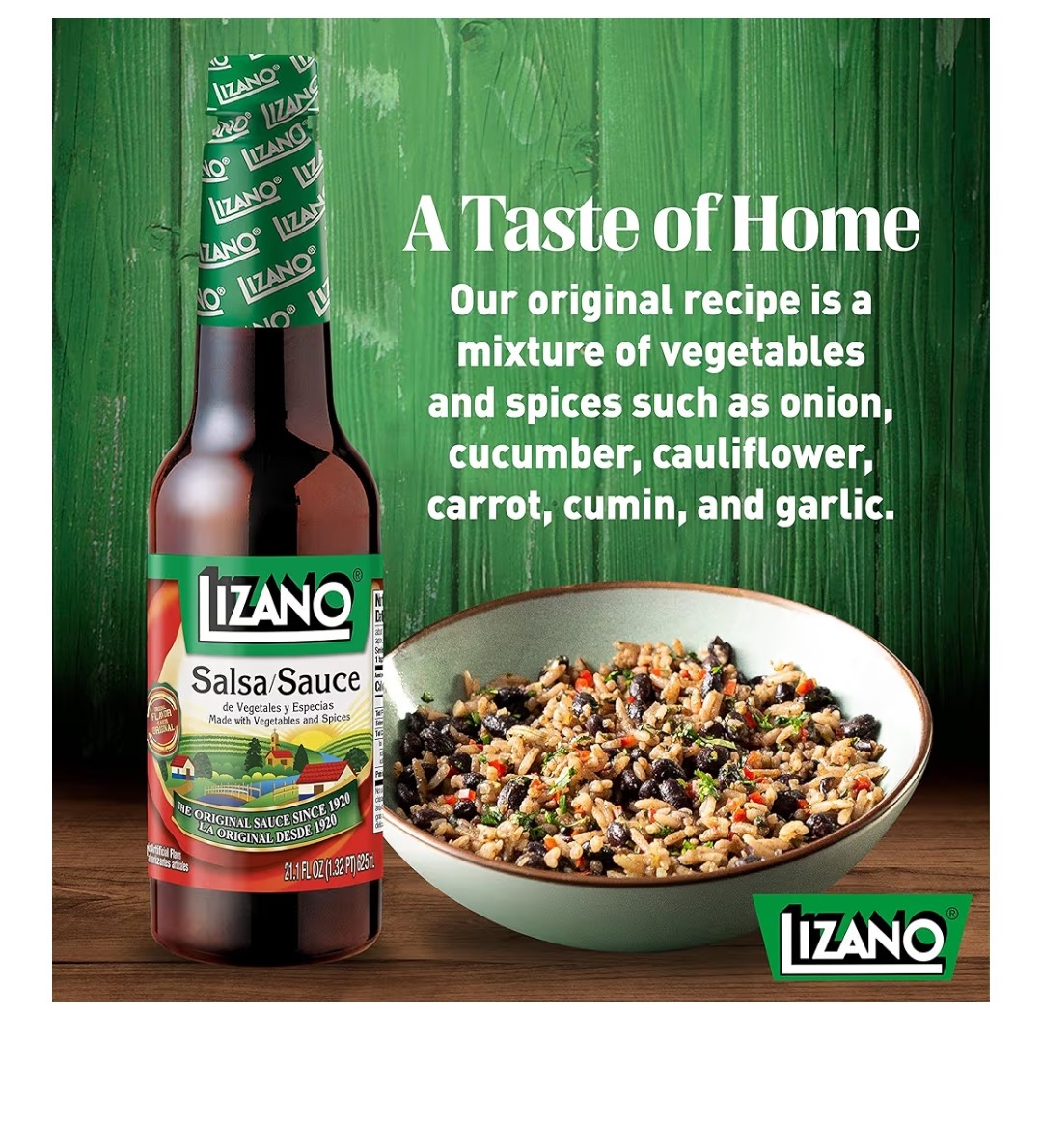
Careful! Those red round peppers to the right of the platano (plantain) are Rocoto peppers and are not for the faint of heart! Only one vendor carried them and we only found them after asking several other vendors if anyone at the fair sold “pimientos picantes” (hot peppers). Rocoto peppers tolerate cooler climates and have a unique black seed. Since I had wanted the “hot” pepper, I was to first to slice off a bit. It was not very spicy and I was disappointed. So I sliced off a bit for Andrew. Much to our chagrin, the piece I had must have been tasting was playing a trick on us because Andrew’s bit was rudely hot. I then tried another piece and was rewarded with the heat of a Scotch Bonnets!! I sliced it up and put it in an off brand of Lizano (Salsa Ingles) so that the heat would infuse into the salsa.  It is delicious and provides a nice kick (for DEBRA).

A more refreshing fruit is one of Andrew’s favorite–the papaya–and is ridiculously inexpensive. Below, Andrew demonstrates the easy process of preparing the papaya.

Notice the smooth technique Andrew uses to maximize the clearing out of the seeds and fibrous material.

But wait, there is more! After snagging a fabulous price on 2 cacao pods, we decided to not only try the flesh and the bean, but also to try to ferment and dry the beans. Here are a few pictures and videos of our process!
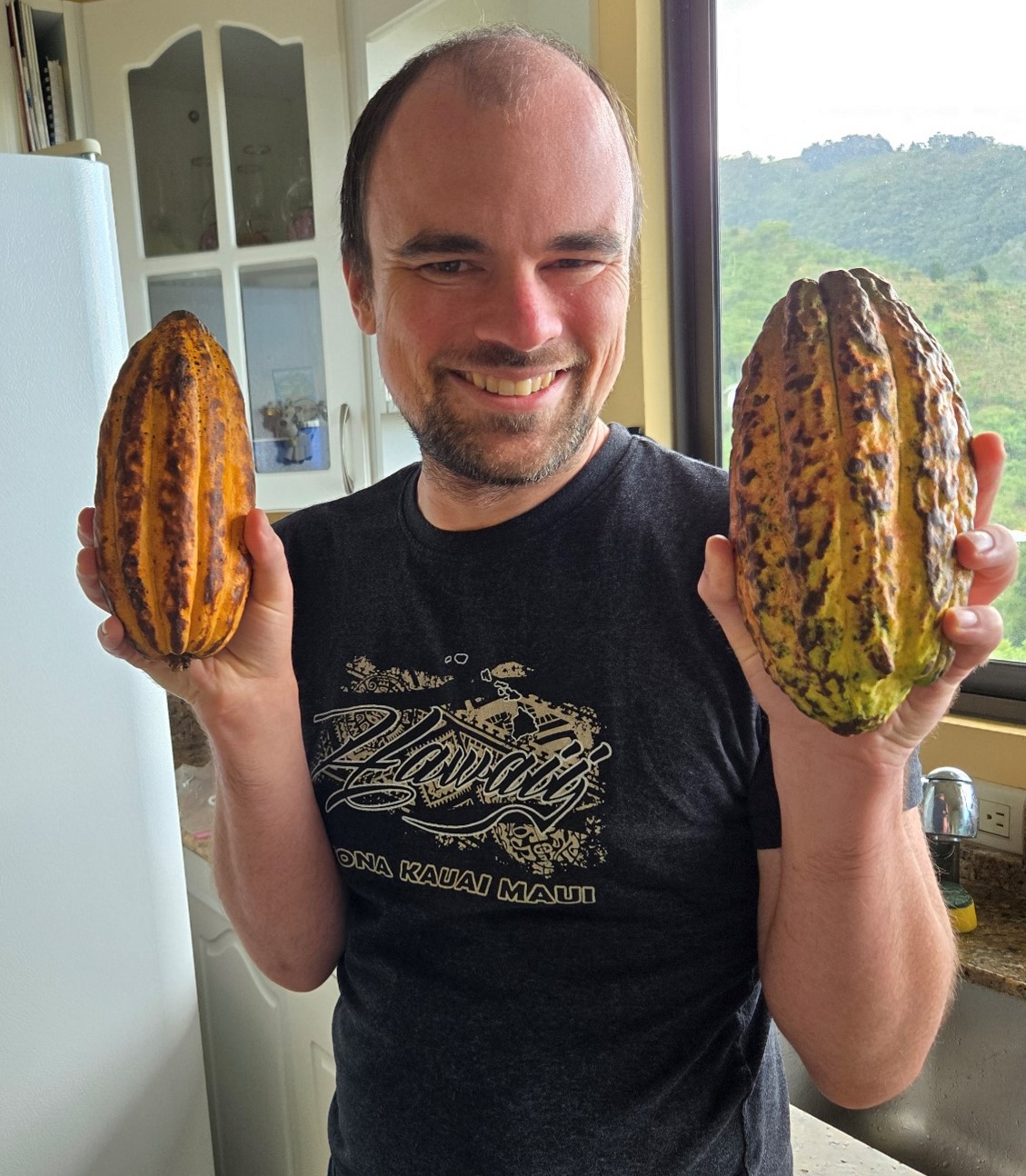
Andrew proudly displays the cacao pods. Ordinarily, cacao pods are really pricey, but we got these beauties for 1500 colones or $3.45 US.

Andrew carefully cuts open the cacao to display all its glory! Debra is not a fan of the sliminess of the white cacao pulp. However, this pulp is essential for fermenting the beans, which develops the chocolate’s flavor.
Andrew provides his opinion about the pulp!
And now he tries the bean!

Not chocolatey enough yet!  But we put the beans in a dish and loosely followed some directions to promote fermentation of the beans. Afterwhich we will dry them, roast them, and peel them to get a tiny bit of chocolate. We will keep you posted as to our success!

In the meantime, Andrew conducted research and trekked to several stores to find real Costa Rican chocolate and we consoled ourselves with some local iterations of the cacao bean! The package in pink contains “guayabita,” a small, aromatic fruit from the guava family. It lends an interesting flavor to the chocolate, which Andrew really enjoys. The chocolate itself is so rich and delicious due to a higher percentage of pure chocolate than mass-market bars in the U.S. It is difficult (if not impossible) to resist eating our entire supply in one sitting.

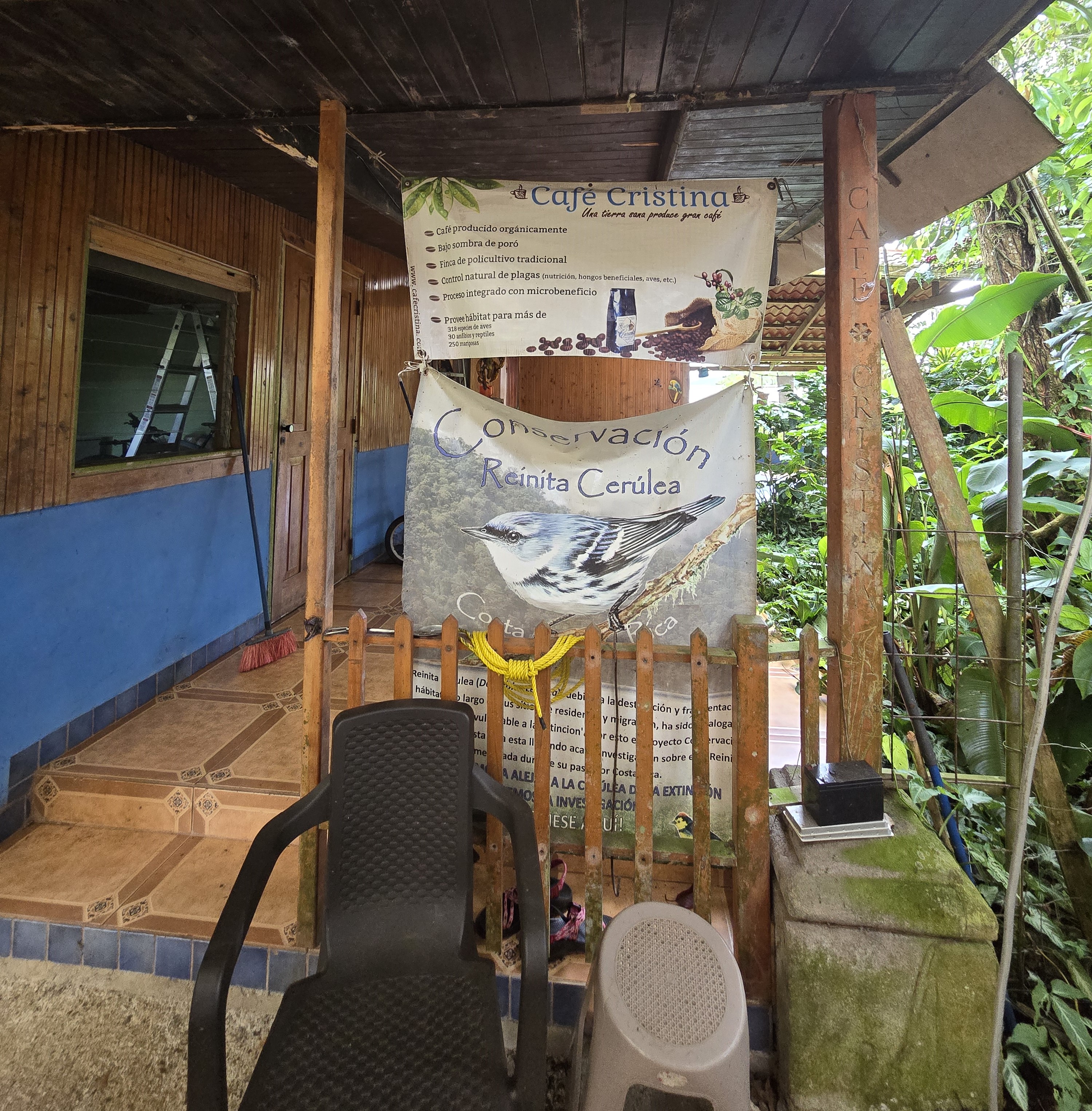
Adventure to Finca Cristina (CAFÉ CRISTINA)

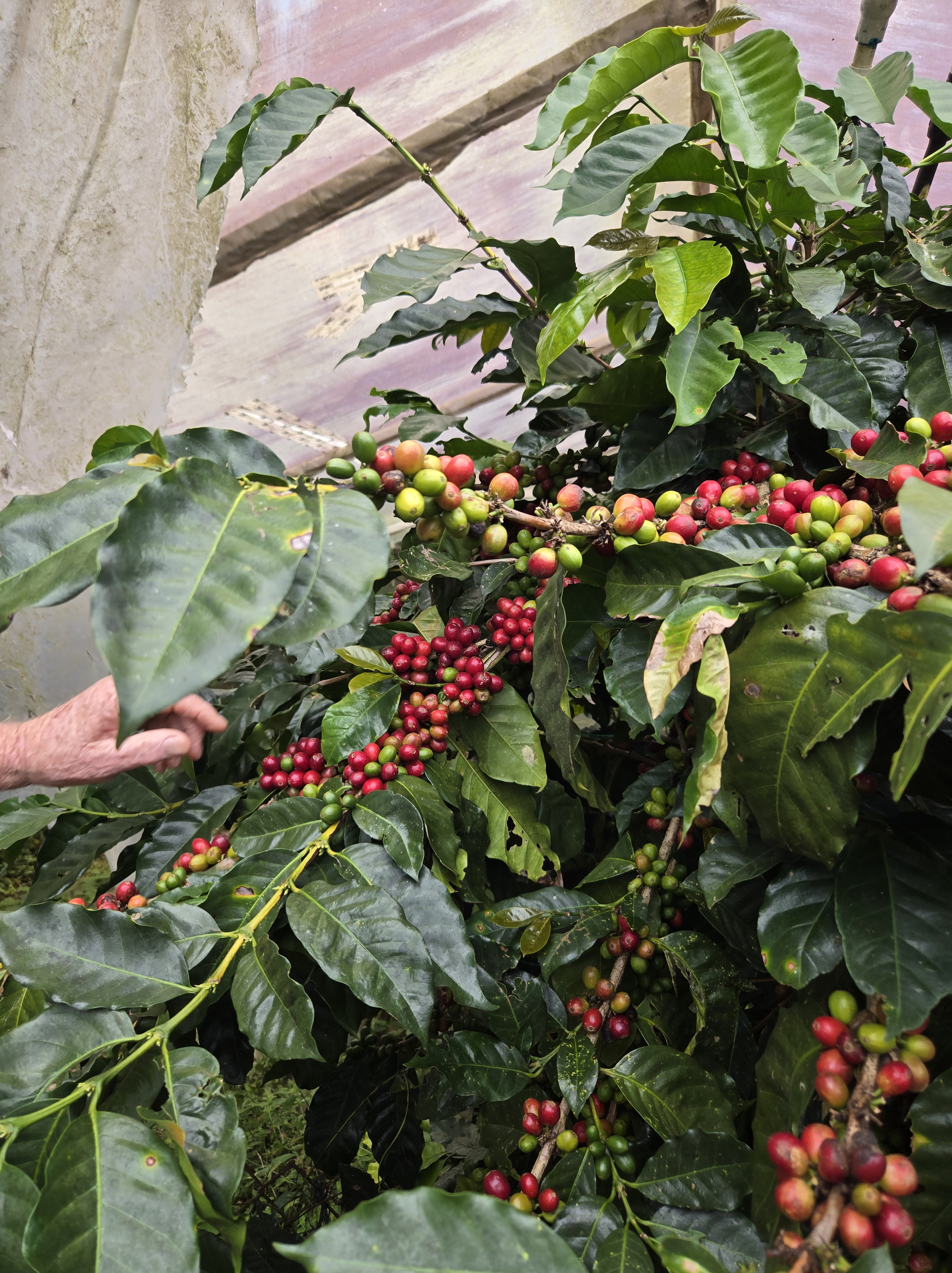
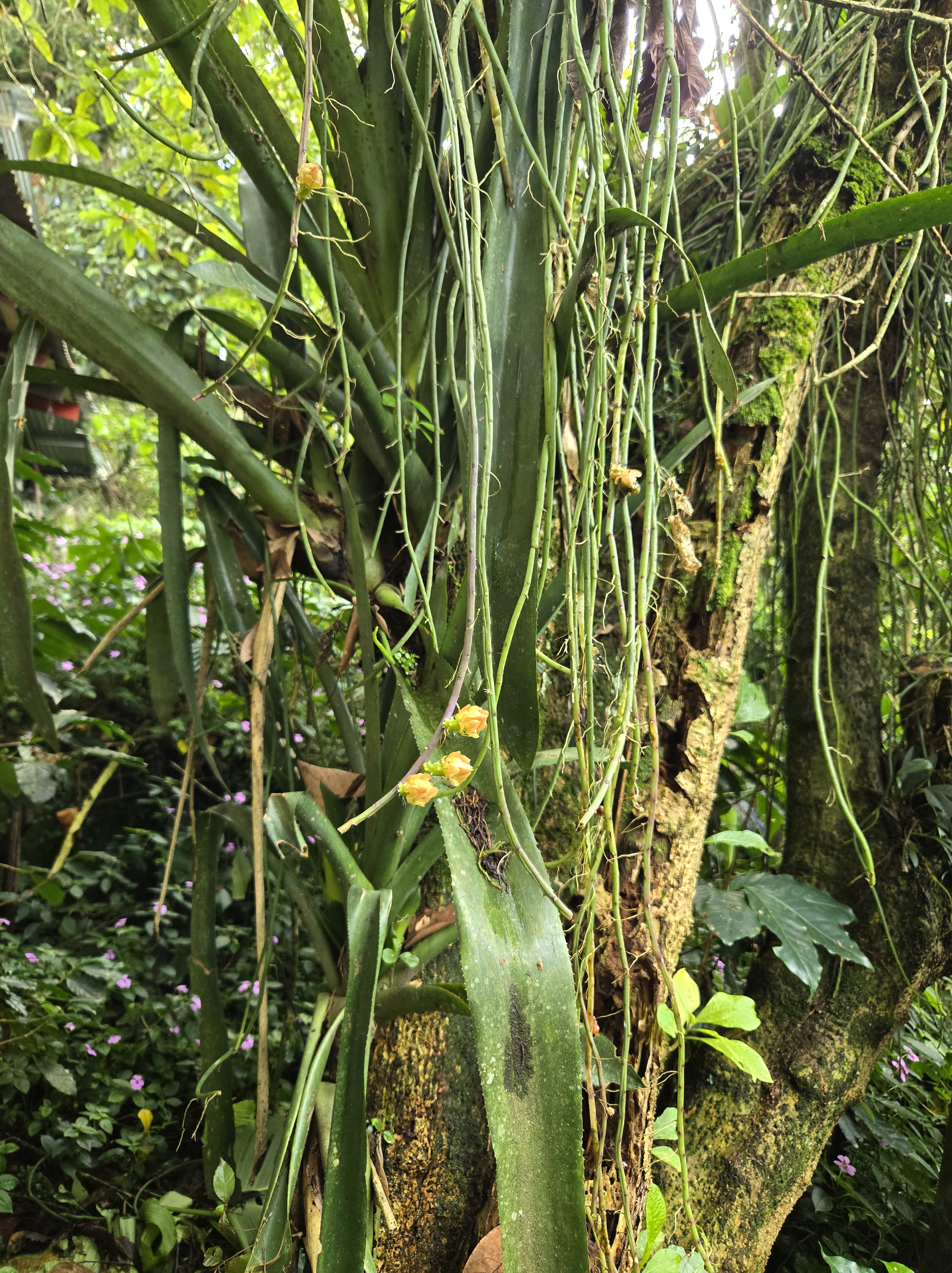
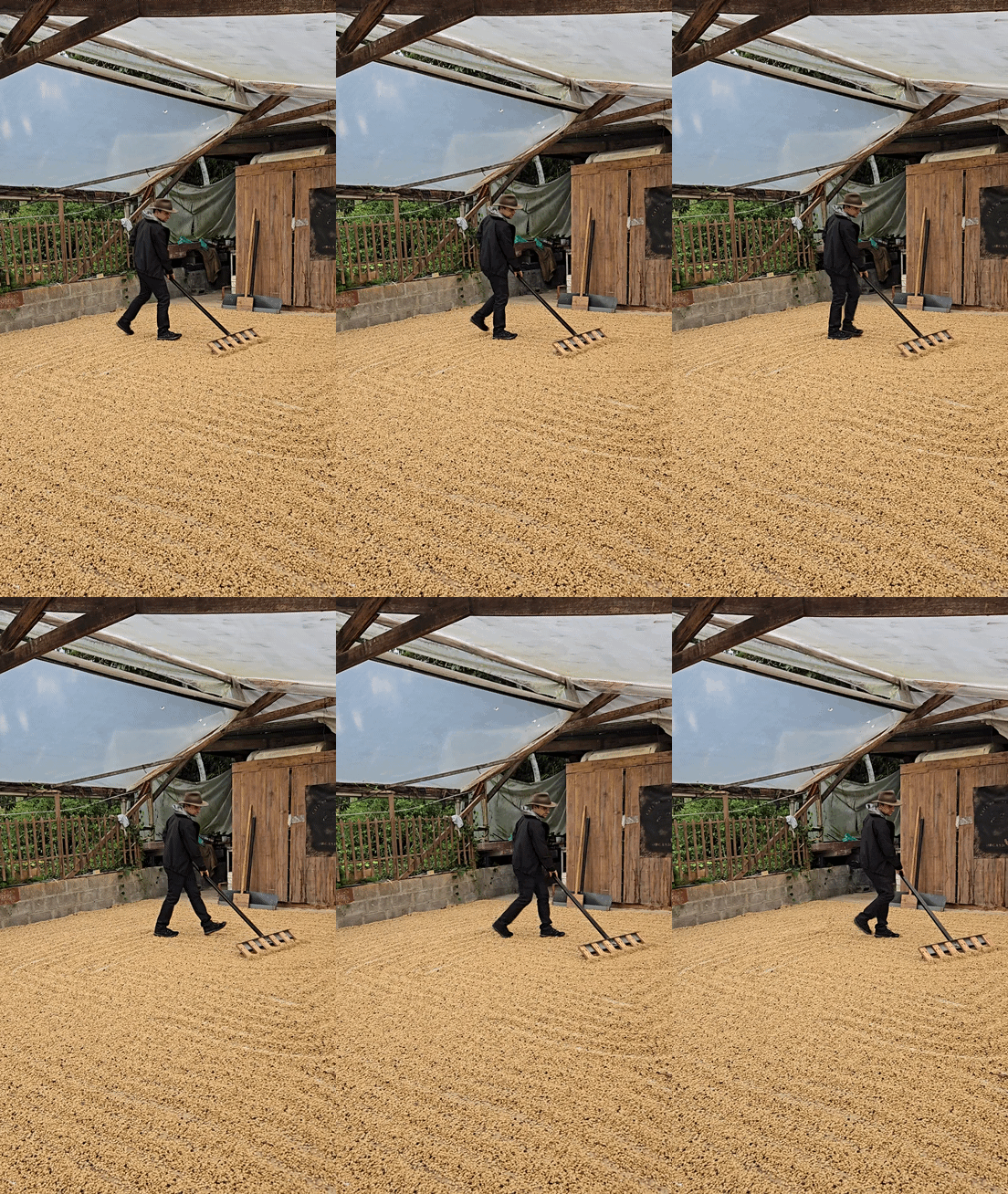
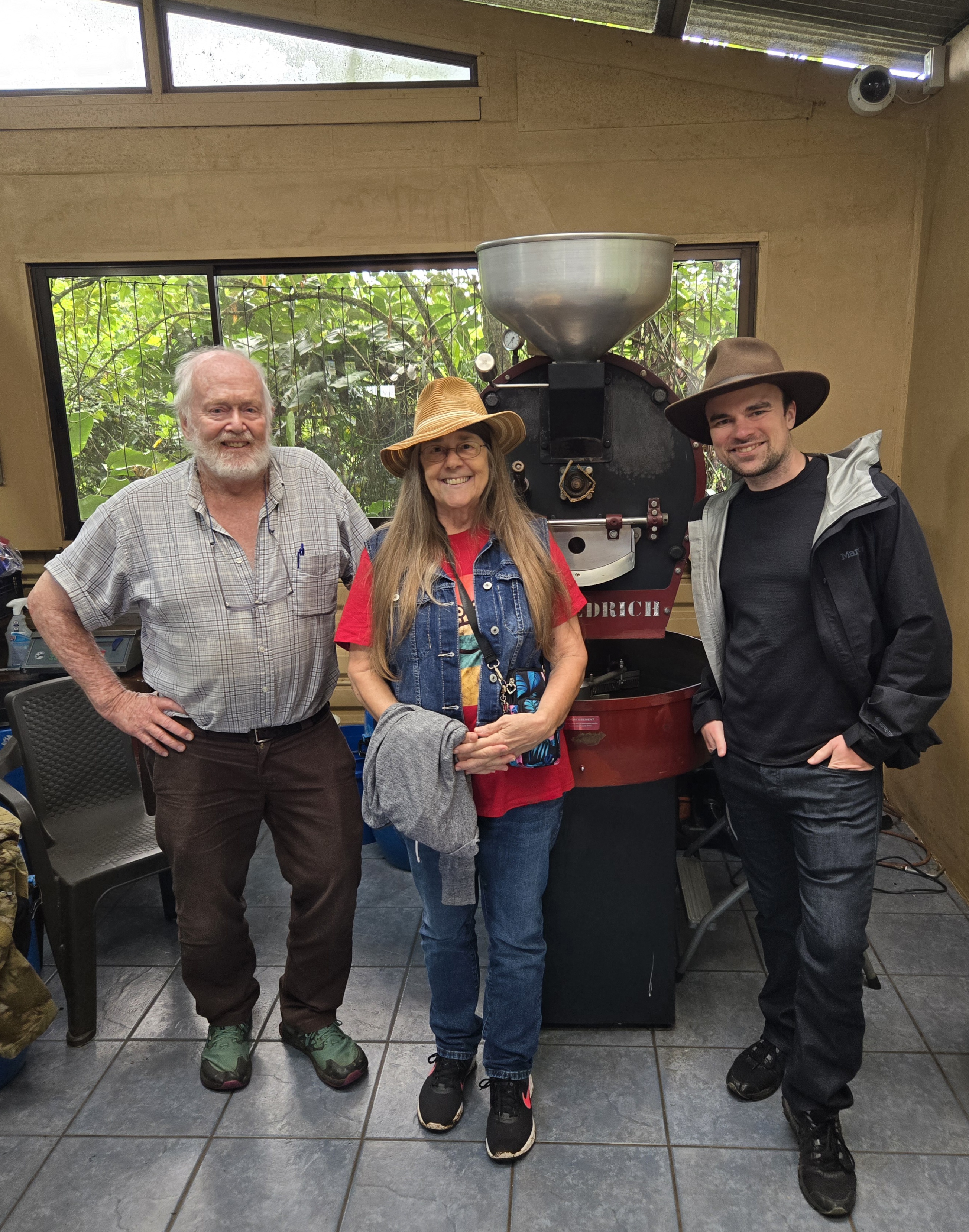
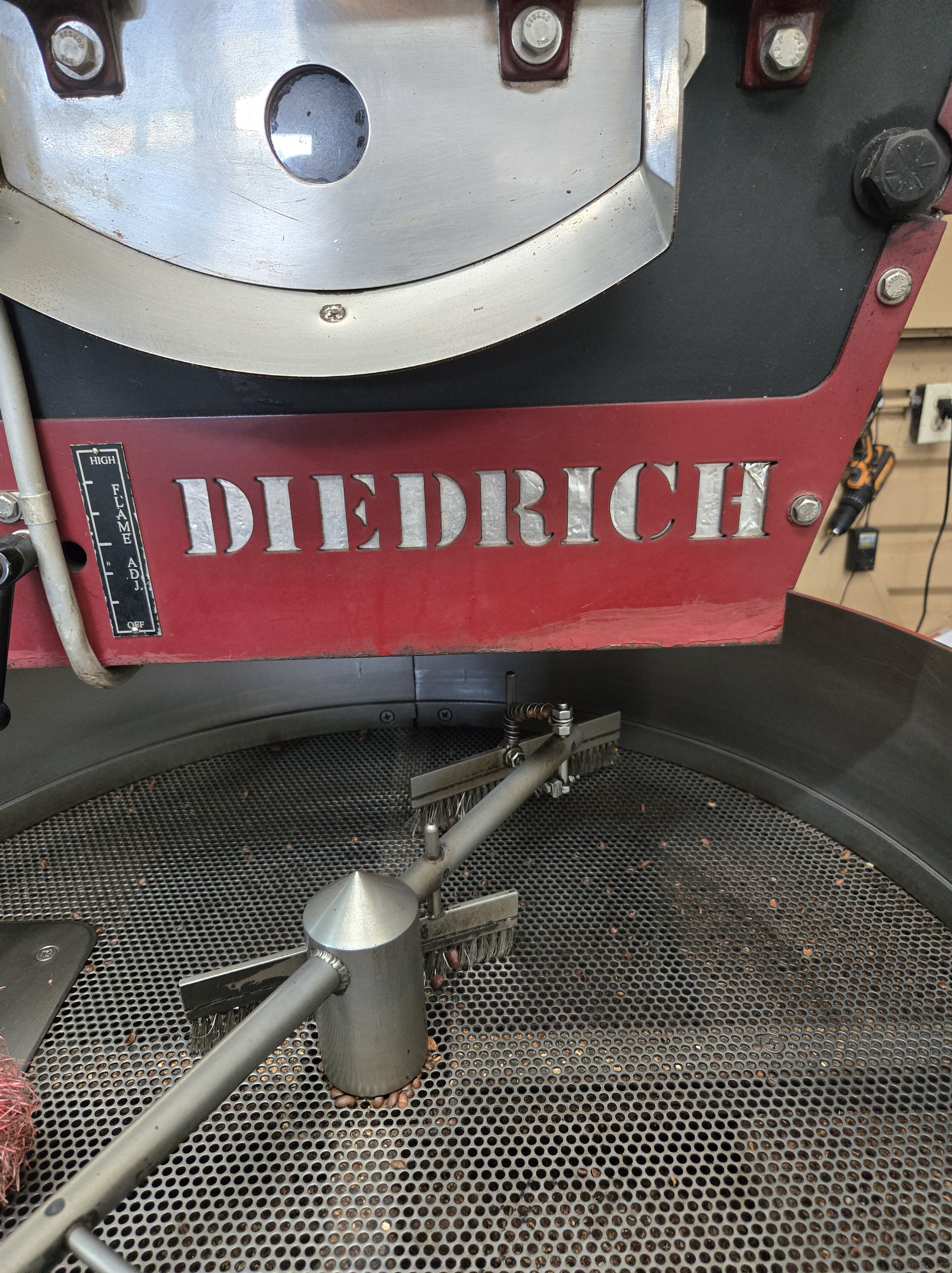
Our second reason for selecting Cartago was to vist a Coffee Farm, a “finca.” The day we we were to, we realized that we had missed the information regarding the tour times on the website, so we resigned ourselves to the fact that at least we might enjoy a walk around and a cup of coffee. We arrived to find that we had, indeed, missed the tour. To our delight, the co-owner of Finca Cristina, Ernie Carman, generously offered to show us around anyway, and we had a wonderful and informative time moving through the process, from coffee plants to the roaster. We even took a turn at raking the coffee cherries set out to dry. It is important to note that Finca Cristina is small, family-owned farm, mill, and roasting establishment producing coffee which is organically grown in a traditional, natural biodiverse polyculture vs the monoculture (growing crop species over a large area) environment. The practice of polyculture, growing multiple species of plants together in the same place at the same time, benefits the soil and utilizes natural pest and weed control. I was amazed to find huge green bean plants growing beside the coffee beans! And, yes, there were cacti, too! I was especially interested in the various tools used for each step and how Ernie had crafted many of the machines from parts he had thrifted and modified to engineer his process. Andrew was excited to try a coffee cherry as he had read about some of the benefits of the fruit. We highly recommend taking an official tour as you will never take another sip of coffee for granted when you realize all of the “magic” that goes into producing that cupful. We also recommend spending some time with Ernie, whose wonderful stories about the process and decisions made for the farm really brought the process to life. Thank you, Ernie! We, of course, came away with bags of coffee (Medium and Light Roasts) and coffee cherry tea to try.

Cooking Tico in Cartago

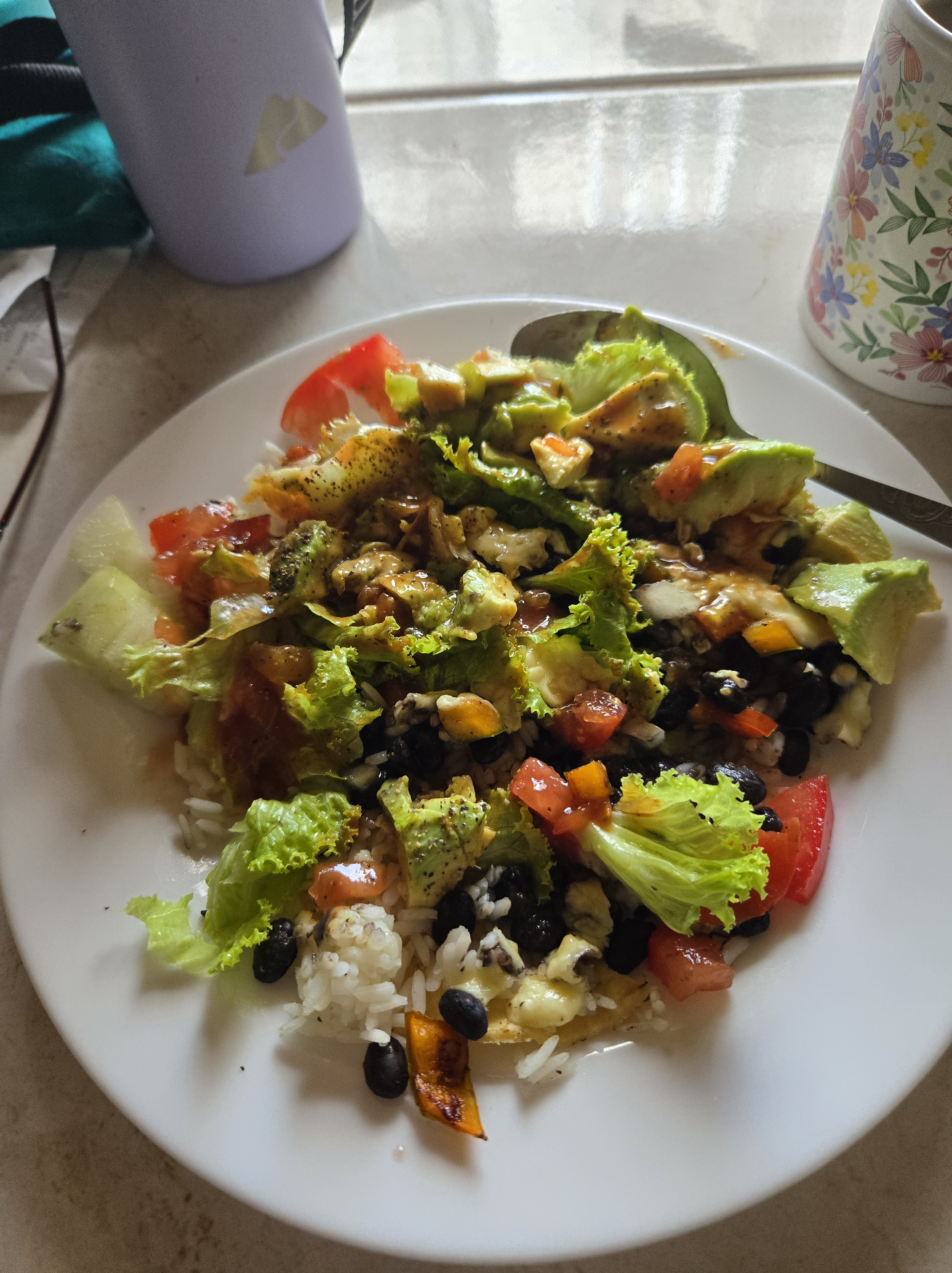
Since food is definately one of the reasons we selected Costa Rica, we were very anxious to not only try eating the local foods but also to try our hand a cooking the local dishes. Gallo Pinto is a traditional Central American meal comprised of beans and rice, Anecdotally, the origin of the word “gallopinto” arises from the resemblance of the combination of colored beans (black or red) and white rice to a rooster with speckled feathers. In Costa Rica, the dish includes Salsa Lizano, a vegetable-based condiment, a golden, tan colored, thin-textured, pourable sauce that is fairly salty with a warm, round flavor of cumin and a bit of pepper. If anyone tries to tell you that Worcestershire Sauce is a good substitute, please inform them that they are wrong! The dish is accompanied by fried or scrambled eggs, and we added onions, bell pepper, and garlic. It also called for cilantro, but, as many of you may know, I am not a fan. More traditional complements include “natilla,” a thinner, milder version of sour cream, a crispy slice of fried white cheese (“queso frito”), plantains, sliced avocado, a corn tortilla, and a strong cup of coffee. We have not added the natilla yet or the fried white cheese, but I think we came pretty close on our first tries. Here is a great recipe: https://stripedspatula.com/gallo-pinto/. And here is a pic of our first try!

Andrew tried “Cas,” a tangy, guava-like fruit drink very popular in Costa Rica. I found it to be just a little too sweet for my tastes! Some fruits, such as papaya and mango, are in abundance at a very reasonable price while apples and grapes which is often the opposite in the U.S. For example, comparing in U.S. dollars, a 1kg papaya costs about $1.42 (and often less) in CR whereas it costs $2.52 in the U.S. 1kg of apples (3-4) are priced around $.99 in the U.S. compared to $4.20 in CR. As always, it all depends on whether the fruit is grown locally or imported. Of course, bananas, plantains, pineapple and mango are also abundant so I won’t be missing apples1

And speaking of plantain, I have actually found my favorite new breakfast and dinner complement: pan-fried plantain (platano). It is so easy and depending on how ripe the fruit is, you can get slightly different flavors and textures. If less ripe (green), it is more starchy, earthy, similar to a potato. If it is fully ripe, it is intensely sweet, with molasses/banana like flavor. I have tried putting salt or sugar on them immediately after pulling them out of the oil. Either way is spectaculary delicious!

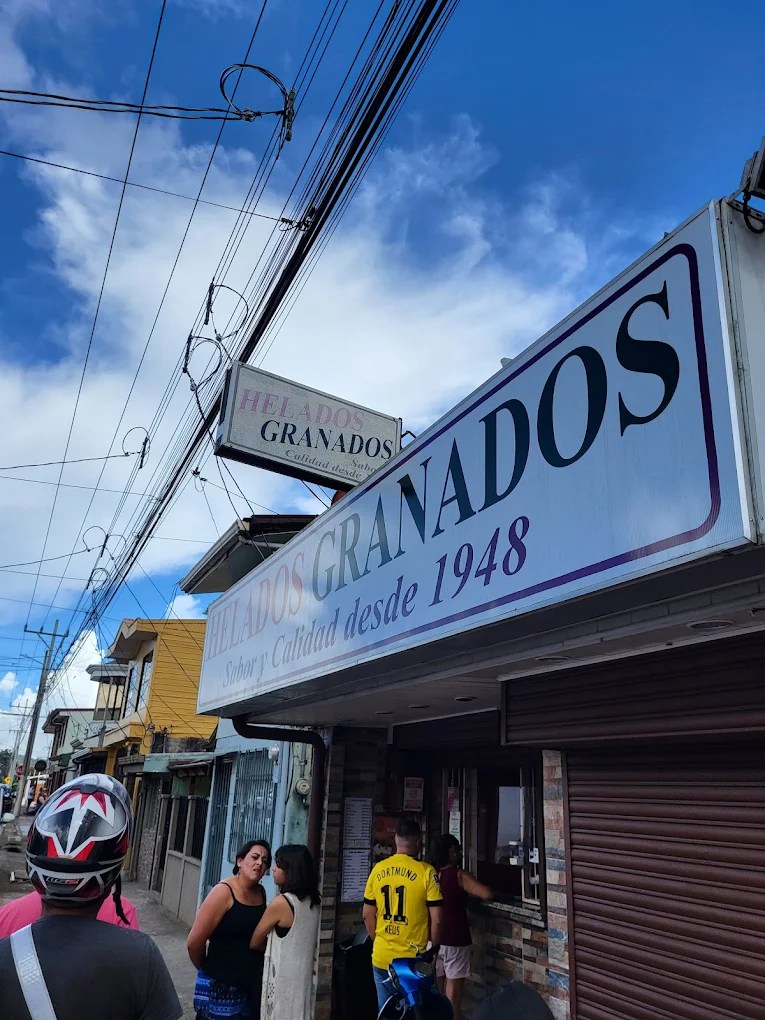
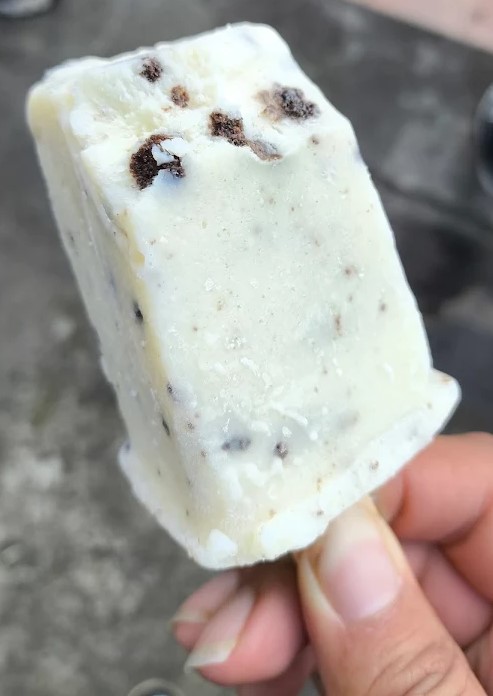
But perhaps the most “fun” we have had in our food experiments so far has been purchasing treats from Helados Granados Ice Cream Shop.  For the generous sum of less than $2, you can enjoy some of the richest flavors ever in ice cream. One special flavor is natilla and strawberry or raspberry. The gentle flavor of this sour cream counterpart lent a creamy base of freshness to the fruit. I, of course, preferred the chocolate, but if we had extended our stay, I am sure I would have gone through the entire menu!

And finally, a picture perfect lettuce to end today’s post!

On to Cartago

It took 2 taxis, 2 busses and and a 16 minute walk between bus terminals to reach our destination in Cartago. Because we had mapped out our journey prior to arriving in Costa Rica, we had very few snafus in making the connections. The bus system is comprised of separate bus companies, each with their own terminals and it is key to know which bus goes where before boarding. We did not encounter a ticket office, paying the transport directly to the driver, and we were grateful for the kind folks who directed us to the correct bus. At the first station, I approached someone coming out of the Bus Station office and she was not only walked us to the applicable bus but pointed out which line to stand in. At the second station, a woman selling sandwiches by the bus informed us that we were taking the correct bus.

The ride from Greater Metropolitan Area of Alajuela and San Jose to Cartago provided a distinct change regarding the vegetation. While San Jose reminded me greatly of the congestion in many cities, with green spaces limited to empty lots and parks, the route gave way to a open spaces rolling with a myriad of vegetation. The air also felt less humid as we climbed up into the province of Cartago. We passed Tres Rios, one of the eight recognized coffee production areas, and it was exciting to anticipate a trip to visit a coffee farm. Our next AirBnB was just a few blocks from the reason (the Basilica of Our Lady of the Angels) I had selected Cartago as a temporary location, and the facilities provided were a step up in space and convenience.  

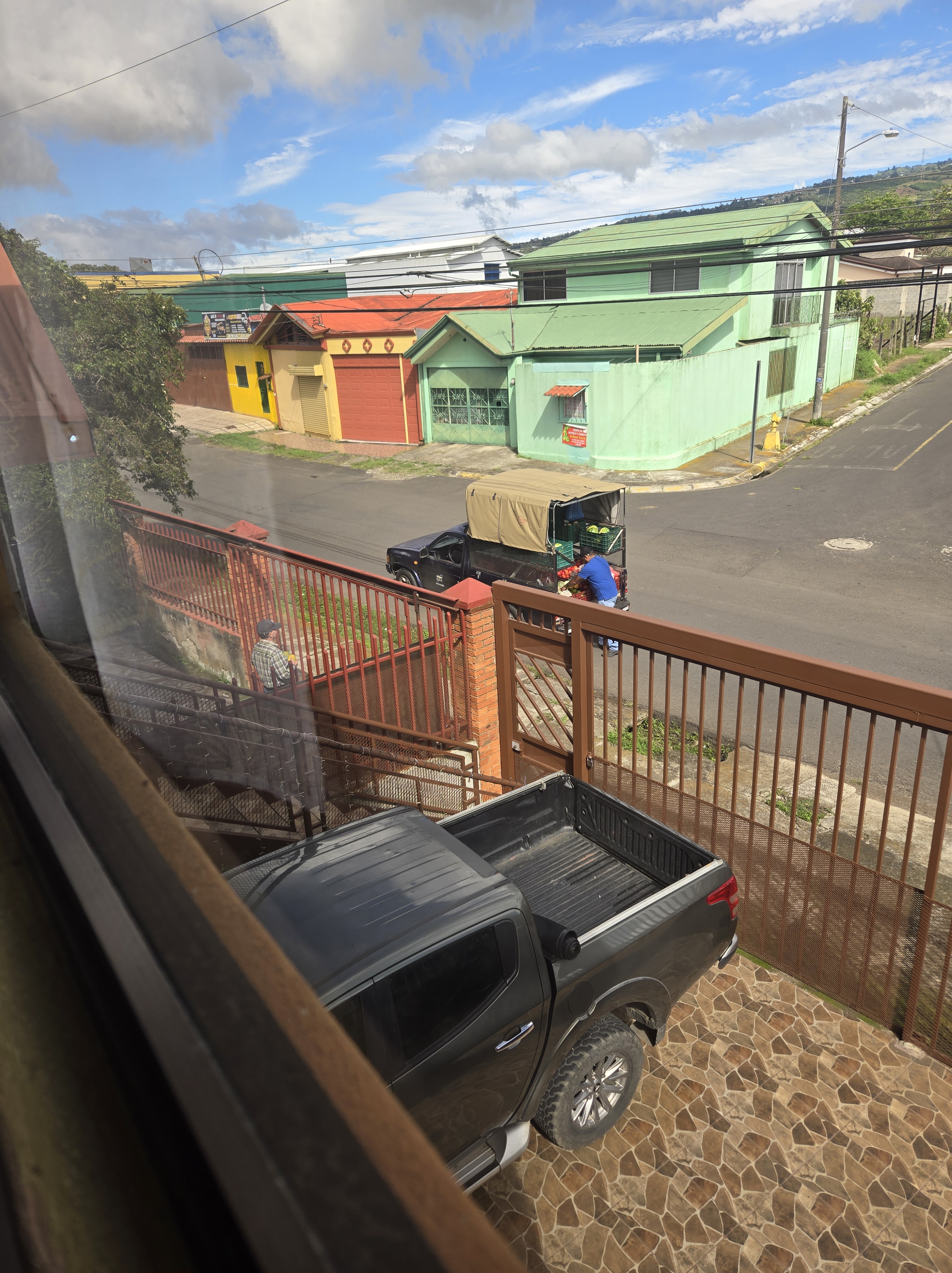
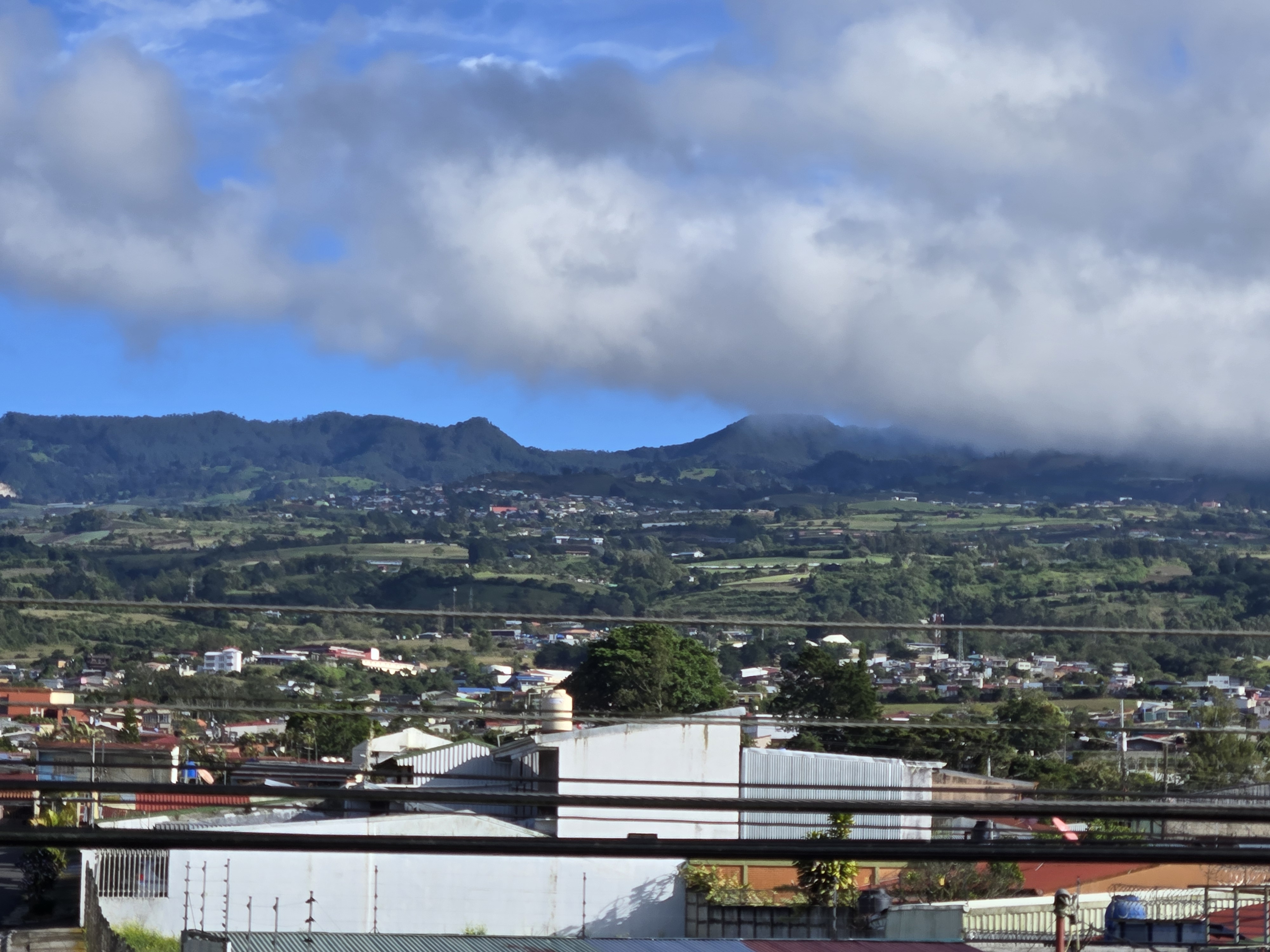
Our apartment at Apartment Maria “J” was on the top left of the photo and commanded a lovely view of the street below and mountains in the distance. While we missed our favorite “soda” (small, local, mom-and-pop open air restaurant generally serving only traditional foods) in Alajuela, the locale was still very walkable with venduleros (greengrocers who sell mostly fresh produce), pulperías (small neighborhood stores which sell basic household items and foodstuffs from behind a counter), and roving vendors going up and down the streets in a truck or on foot shouting in a sing-song “A..gua..cates! Muyyyyyy…bueno!” Because avocados do have a precious window between just-right and ruined, it makes sense to sell them quickly. Even at 3 for $2.00, it is best not to waste them. And with so many opportunities to buy and cook our own food, we only ventured to a soda one time.